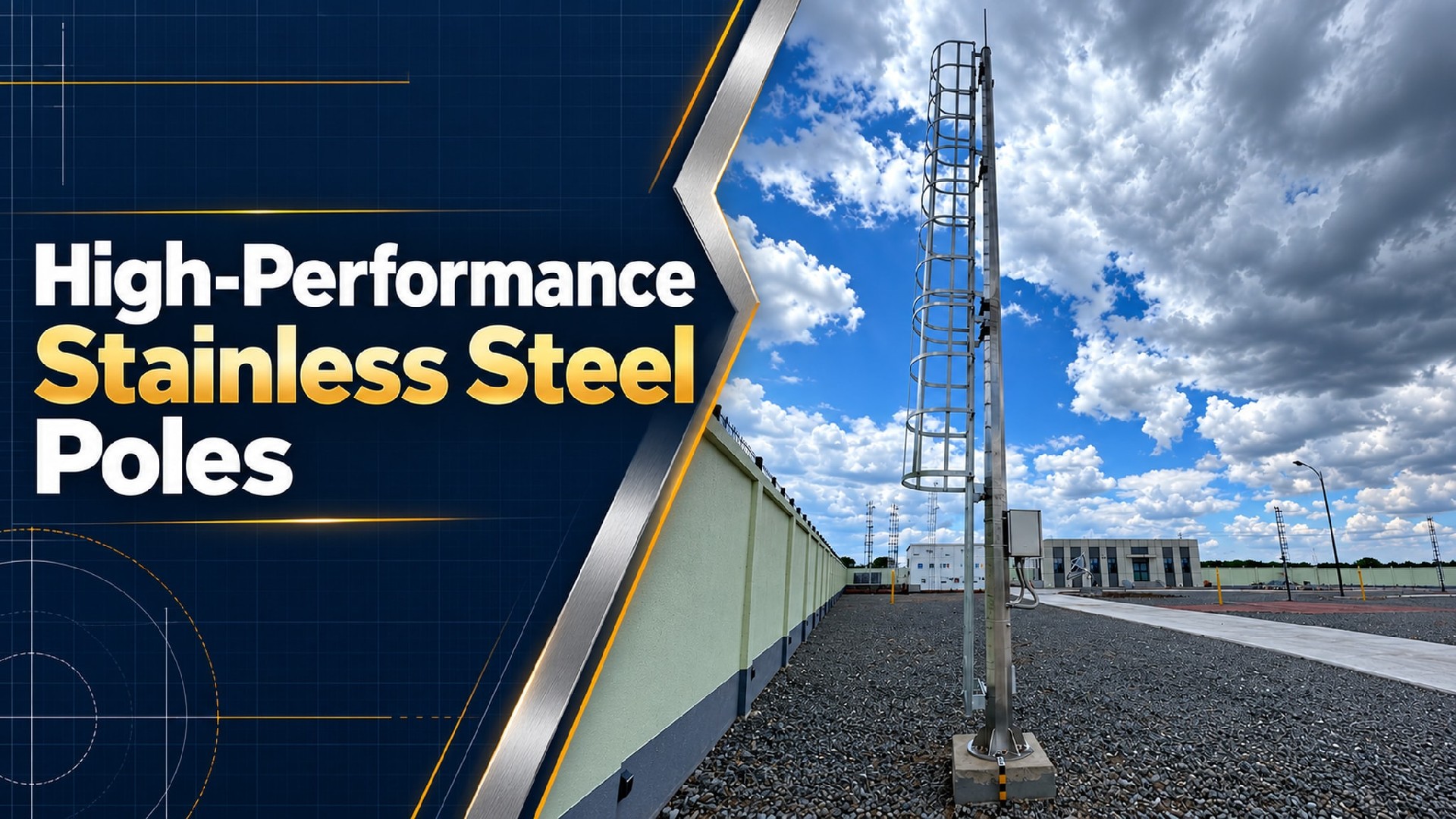
Core Engineering Advantages
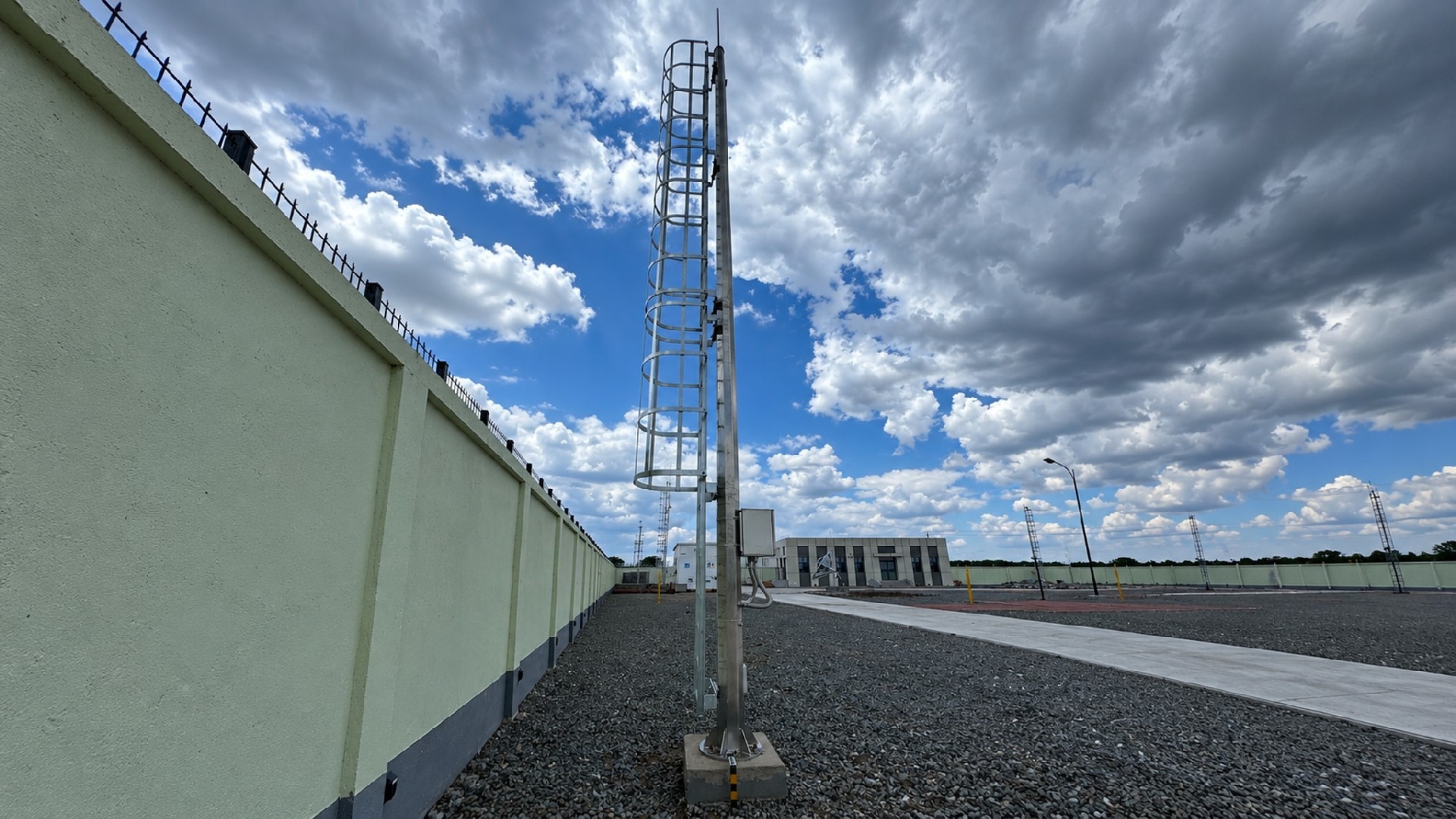
Our reinforced design handles complex multi-device mounting without vibration or deflection, allowing for instant compatibility assessment:
Maximum Head Load: Rated for up to 100 kg of top payload. Tensile Strength ≥515 MPa
Basic Wind Speed: 49 m/s (177 km/h, 3‑sec gust) @10 m height, ASCE‑7‑22 Exposure Category C.
Reinforced Walls + High-Strength Material: SS316L high-strength stainless steel (Yield Strength ≥ 205 MPa) synergizes with thickened tube walls and internal ribbing to deliver exceptional bending stiffness. Purpose-built for heavy-duty PTZ cameras, weather radars, and 5G small cells.
High-Rigidity Moment Balance: Optimized mechanical design ensures minimal deflection and negligible vibration under full load, supporting crystal-clear imaging from precision surveillance equipment.
Scalable Mounting Interface: Multiple standardized mounting brackets reserved for future device upgrades and system expansion
To achieve true C5-M marine-grade performance, the material is only half the equation. Our manufacturing process ensures structural integrity and corrosion resistance at the microscopic level:
Double-Sided TIG Welding: Double-sided welding with uniform fish-scale beads.
Strict Weld Penetration Requirements: Weld depth is strictly controlled to at least 3/4 of the plate thickness (≥75%) to prevent internal vulnerabilities.
Full Electrolytic Passivation: Restores the natural chromium oxide layer across the entire surface, including weld zones, maximizing pitting resistance.
100% NDT Inspection: Penetrant Testing (PT) detects surface micro‑cracks; borescope inspection identifies internal weld porosity.
Instead of relying on protective coatings that require periodic repainting and heavy‑lift crane‑assisted maintenance for carbon steel poles, our SS316L stainless steel delivers inherent corrosion resistance. No coating delamination, no recurring repainting work.
SS316L Marine-Grade Base Material: Molybdenum content ≥2% provides inherent resistance to pitting and crevice corrosion, far superior to standard 304 stainless steel in high-salinity, high-UV environments.
Self-Cleaning Architectural Finish: Brushed/mirror surface treatment rinses clean with rainwater. Maintains premium metallic aesthetics for decades.
| Comparison Dimension | Heavy-Duty SS316L Stainless Steel Pole | Heavy-Duty Carbon Steel Pole (Hot-Dip Galvanized + Powder Coated) |
| Corrosion Protection | Inherent material-level corrosion resistance | Multi-layer surface-based corrosion protection (HDG + powder coating) |
| 20-Year O&M Cost | Very low maintenance; periodic surface rinse recommended for coastal environments | Moderate maintenance; touch-up repair required if coating is damaged |
| Corrosion Resistance | C5-M Marine grade, excellent resistance to salt-spray & chemical atmosphere | C3-C4 performance; reliable performance when coating integrity is maintained |
| Long-Term Structural Safety | Strength retention over full service life, no material degradation | Wall thickness may reduce if coating fails and corrosion occurs; protected when coating remains intact |
| Surface Aesthetics | Premium brushed / mirror finish, low-maintenance appearance | Uniform industrial coated finish; may fade/stain under harsh environment over decades |
| Up-front Capital Cost | High initial investment | Competitive lower upfront cost |
| Ideal Applications | Coastal high-salt zones, chemical sites, landmark installations, hard-to-access locations where maintenance is costly | Inland areas, urban general projects, cost-sensitive permanent installations, well-accessible sites for routine maintenance |
| Total Cost of Ownership (TCO) | Best TCO for high-corrosion & hard-to-maintain projects | Best TCO for inland / accessible projects with budget constraints |
Designed for the world’s most demanding environments:
Coastal Harbors & Port Infrastructure: Withstands continuous salt spray and vibrations from heavy-lifting equipment.
Offshore Wind Farms: Engineered for extreme marine conditions and remote accessibility challenges.
Cross-Sea Bridges: High wind-load tolerance and superior structural damping for long-span installations.
Coastal Highways & Smart Transportation: Reliable performance for continuous traffic monitoring and 5G deployment.
Chemical Industrial Zones: Resists aggressive atmospheric chemicals and acidic pollutants.
| Parameter | Specification / Details |
| Material Grade | SS316L |
| Outer Diameter | Customizable based on load requirements |
| Wall Thickness | Optimized for specific wind sail area |
| Pole Height | Customizable to project specifications |
| Flange Size & Bolt Pattern | Standard or custom-engineered matching |
Supported by an ISO 9001:2015 quality management system, we can adapt pole design, manufacturing quality control, corrosion protection, and technical documentation to project-specific standards and local requirements, supporting overseas project approval, procurement, and acceptance.
Structural Design & Wind Load Verification: Structural calculations can be performed in accordance with EN 40 / EN 1993, AASHTO, applicable AS/NZS standards, SASO requirements, or other project-specified codes. Design verification can incorporate site wind speed, equipment loads, mounting height, and environmental conditions.
Welding & Manufacturing Control: Welding procedures and quality control can be adapted to applicable EN 1090 execution requirements and ISO 3834 welding quality requirements, with corresponding process, inspection, and documentation controls implemented as required by the project.
Corrosion Protection: Hot-dip galvanizing and coating systems can be configured according to the project environment and required service life. Treatments can be specified to ISO 1461, ASTM A123/A123M, or other project requirements for standard outdoor, coastal, high-humidity, and high-salinity environments.
Engineering Documentation Support: Project documentation can include structural calculation reports, shop drawings, material certificates, welding records, galvanizing or coating inspection reports, dimensional inspection records, and factory quality documentation for client, consultant, or EPC review.
Multi-Market Project Support: We support project requirements across Europe, North America, the Middle East, and Asia-Pacific. Applicable design standards, inspection requirements, and document packages can be defined according to the project location and technical specification.
1. Should I choose 304 or 316L stainless steel for my project?
The choice depends on the site environment, appearance requirements and maintenance conditions. Type 304 suits many less aggressive outdoor environments, while molybdenum-containing 316L generally offers better resistance to chloride-induced pitting and crevice corrosion.
Share your project location, salt exposure, industrial pollutants and expected maintenance arrangements. We can help compare material options against your project requirements.
2. Does 316L guarantee long-term corrosion resistance at coastal sites?
The material grade alone cannot guarantee corrosion-free performance. Salt deposits, temperature, humidity, surface condition, post-weld treatment, joint details and cleaning all affect durability.
Sites exposed to seawater splash, persistent moisture or concentrated salt deposits require further assessment. More corrosion-resistant materials may be needed for particularly severe conditions.
3. When is stainless steel worth choosing over galvanized steel?
Stainless steel is worth considering when corrosion resistance, metallic appearance or maintenance access is a key project concern.
Compare the initial cost with the site exposure, maintenance frequency and access costs. Where galvanized steel with a suitable protective system meets the requirements, it may offer a more economical solution.
4. Can welding affect corrosion resistance? How are weld areas treated?
Weld heat tint, oxide scale and fabrication contamination can reduce local corrosion resistance. Welding and post-weld treatment are selected according to the material, joint design and project requirements.
Appropriate cleaning, pickling and passivation can be specified. The treatment scope, surface appearance and inspection requirements are agreed during technical review.
5. Is the difference between brushed and mirror finishes purely cosmetic?
No. Surface roughness, finishing direction and workmanship can also affect salt and dirt accumulation and ease of cleaning.
For coastal or appearance-sensitive projects, the finish should be selected alongside weld treatment and maintenance requirements. Samples or an agreed finish specification can help define the required appearance for batch production.
6. Can aluminum camera brackets cause galvanic corrosion when mounted on stainless steel poles?
Galvanic corrosion may occur when dissimilar metals are electrically connected in the presence of moisture or salt.
Suitable non-conductive pads, insulating sleeves or protective coatings can be specified for the connection. Fasteners and other potential contact paths should also be reviewed, with corrosion-control measures coordinated with project grounding and bonding requirements.
7. Can stainless steel poles support multiple cameras, radar or communications equipment?
Yes, subject to project-specific structural design. Material grade alone does not determine pole capacity. Pole height, equipment weight and wind area, outreach length, mounting positions and site wind conditions must also be considered.
For long-range or PTZ cameras, pole-top displacement, rotation and operational stability can be assessed within the agreed design scope.
Specifications are typical values for reference only under standard conditions — not a guarantee. Final performance shall be determined by project design calculations and factory test reports. Consult a local engineer before specifying.